Completion day on your new build is one of the most exciting days of your life, but it can also be overwhelming. Between key handovers, legal paperwork, and the excitement of finally seeing your finished home, it's easy to miss important checks that could cost you later.
This checklist covers everything you need to do on completion day, so you can enjoy the moment without missing anything critical.
Before you collect the keys
Completion day officially happens when your solicitor confirms funds have been received by the seller. For new builds, this typically means your developer's solicitor. You can usually expect to get the call mid-morning to mid-afternoon, which is rarely as early as you hope.
Before you head to pick up the keys, make sure:
- Your solicitor has confirmed completion in writing
- You have photo ID to present at the developer's sales office
- You've arranged buildings insurance to start from today (legally required from exchange)
- You have a way to record any issues you find (phone, notepad, or a snagging app)
At key handover: what to ask for
Don't just take the keys and leave. Your key handover appointment is your opportunity to collect everything you're entitled to receive. Ask for:
Documents & warranties to collect
- NHBC Buildmark (or equivalent warranty) certificate and policy documents
- Building regulations completion certificate
- Gas Safe certificate (if applicable)
- Electrical installation condition report (EICR)
- Boiler service record and manufacturer's warranty
- Appliance manuals, warranties, and serial numbers
- Window and door certificates (FENSA or equivalent)
- Energy Performance Certificate (EPC)
- Alarm and smart home system instructions
Keys, fobs & access
- All sets of front door keys (typically two)
- Back door and garage keys
- Window restrictors keys (where fitted)
- Key fobs for communal areas (if applicable)
- Alarm code and programming instructions
- Garage door remote controls (if electric)
Meter readings: do this first
Before you do anything else in the property, take photos of all meter readings. This is important. Without proof of the meter readings on the day you took ownership, you may be billed for energy used during the build or testing phase.
- Gas meter reading (photograph the display with a timestamp)
- Electricity meter reading (including any off-peak registers)
- Water meter reading (if fitted)
- Note the meter serial numbers from the label on each meter
Don't assume the developer has registered utilities in your name. Contact your preferred energy supplier on completion day to set up accounts, using the meter readings you just photographed.
Your first walk-through
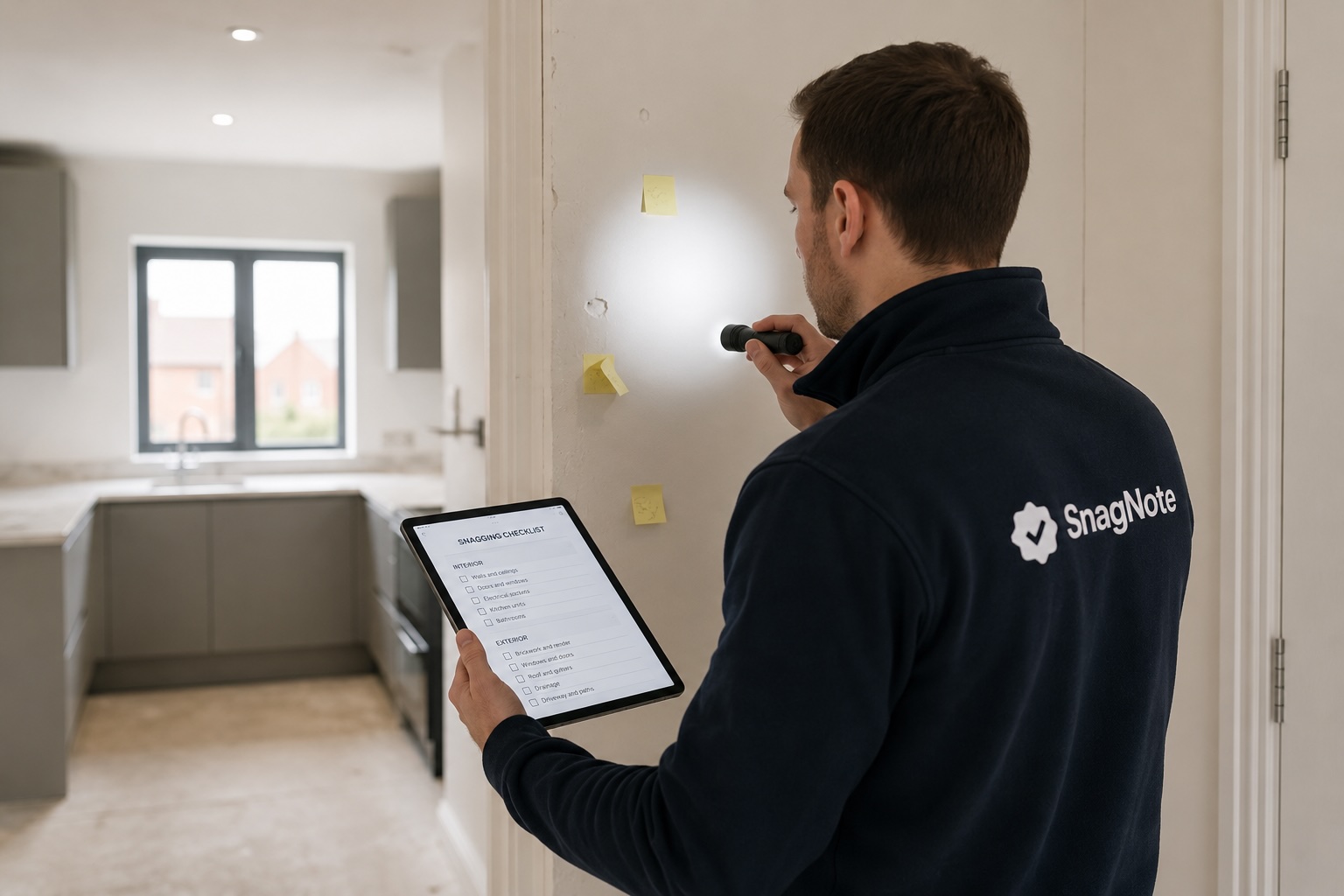
Completion day isn't your snagging inspection; you won't have time to check every corner thoroughly. But you should do a quick first walk-through to catch any obvious issues that need to be reported immediately, particularly anything that makes the property uninhabitable or unsafe.
First walk-through: key checks
- All rooms present and accounted for (compare against plans if possible)
- Windows and external doors open, close, and lock correctly
- Heating: test the boiler and check radiators warm up
- Hot and cold water runs from all taps and showers
- All lights and sockets work (check with a phone charger)
- Toilets flush and cisterns fill correctly
- No visible water damage, damp, or staining
- Appliances are present and undamaged
- Garden fencing is secure and complete
- All items specified in your sales contract are present
Photographing the condition
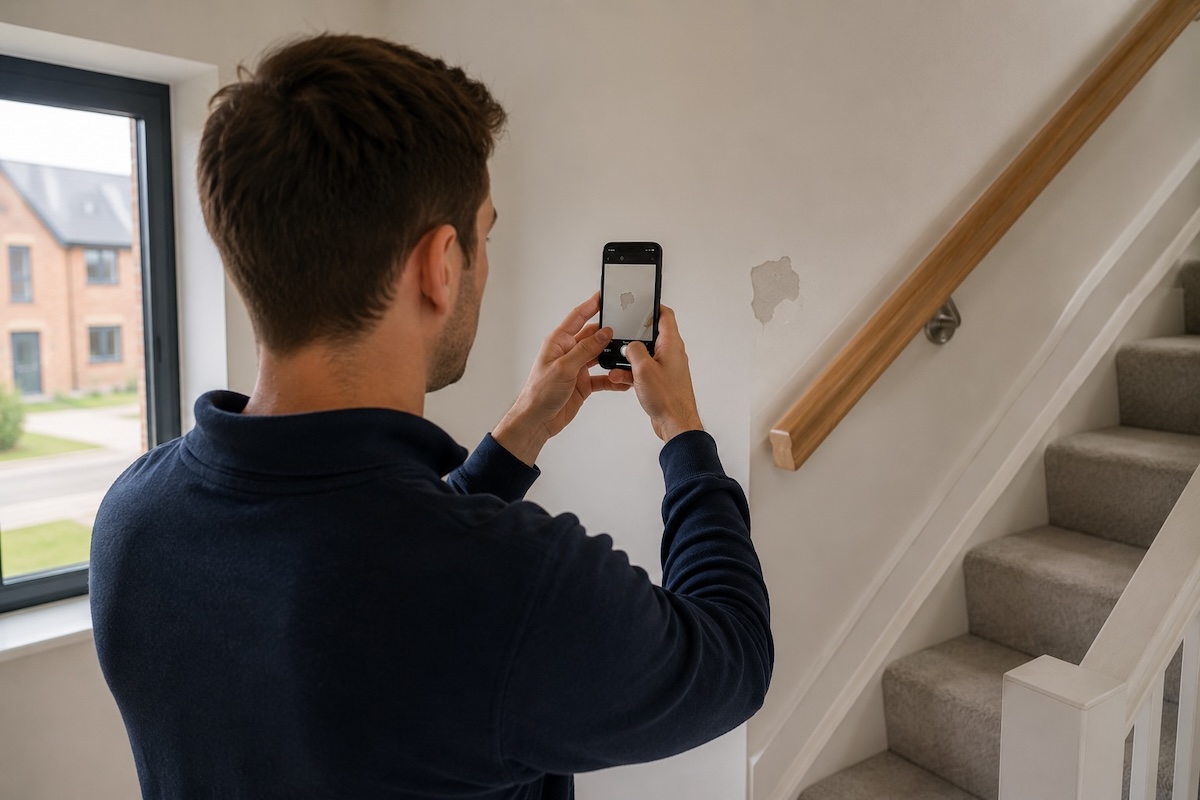
As you walk through, photograph every room, not just the issues. Date-stamped photos of the property in its as-received condition are invaluable if any disputes arise later. Take wide shots of each room plus close-ups of any defects you spot.
Pay particular attention to areas that are often finished last and most likely to have issues: window reveals, around skirting boards, bathroom silicone sealing, and kitchen unit alignment.
Boiler and heating demonstration
Ask your developer for a boiler demonstration if it wasn't included in your sales process. You should be shown:
- How to operate the boiler controls and thermostat
- How to repressurise the system if pressure drops
- Where the stopcock is located
- Where the consumer unit (fuse box) is and how circuit breakers work
- How to bleed radiators
What to do if you find problems immediately
If you spot anything that makes the property unsafe or uninhabitable, such as a major water leak, no heating in winter, broken locks, or missing appliances, report it to the developer in writing the same day. Follow up with a phone call to ensure it's logged.
For minor snags found on completion day, note them but don't panic. You have two years under the NHBC builder warranty period to report defects, so a more thorough snagging inspection in the days after you move in is the right approach.
Final thoughts
Completion day is exciting, but it's also a working day. The checks you do now set the tone for how quickly issues get resolved. Take the meter readings, collect every document, and do a methodical first walk-through before you start moving boxes in.
The good news is that even if you miss something today, you have time to find it. A thorough snagging inspection in the first few weeks after completion is your real opportunity to catch every defect and build a formal list for your developer.

Log defects with photos as you find them, organise by room, and send reports to your builder with SnagNote.